Warm Homes Loan Scheme: Solar and Battery Loans Explained
The upfront cost of solar panels or home battery storage can be a barrier, even when the long-term benefits make sense.
The new Warm Homes Loan Scheme is designed to make home energy upgrades more accessible. It provides government-backed, no-interest or low-interest finance, allowing eligible homeowners to spread the cost of solar panels, batteries, heat pumps and other renewable technologies.
Here is what homeowners need to know about the scheme, what it covers and how to apply.
What is the Warm Homes Loan Scheme?
The Warm Homes Loan Scheme is a UK government initiative that supports loans for energy-saving home improvements.
The government does not lend money directly to homeowners. Instead, participating banks, credit unions and specialist lenders provide the loans, with government support helping them offer reduced interest rates.
Some lenders offer interest-free products, while others provide lower rates than their standard loans. Repayment terms vary, with some products allowing the cost to be spread over a much longer period.
The exact interest rate, monthly payment and repayment period will depend on the lender, the amount borrowed and the applicant’s financial circumstances.
Is the Warm Homes Loan Scheme a grant?
No. The Warm Homes Loan Scheme provides loans that must be repaid.
This is different from a grant, which does not normally need to be repaid. Applicants should consider:
- The interest rate
- The length of the agreement
- Monthly repayments
- Any charges or fees
- The total amount repayable
In some circumstances, a Warm Homes loan may be used alongside another funding scheme, such as the Boiler Upgrade Scheme. However, two government schemes cannot fund the same improvement.
What home improvements are covered?
The scheme covers several renewable energy and low-carbon technologies, including:
- Solar photovoltaic panels
- Home battery storage
- Air source heat pumps
- Ground source heat pumps
- Heat network connections
- Domestic wind turbines
- Micro hydroelectric systems
Homeowners can apply for finance covering more than one eligible improvement. This means a suitable solar panel and battery storage system could potentially be financed together.
How much can you borrow?
The maximum supported loan amounts include:
- Solar panels: up to £15,000
- Electrical battery storage: up to £15,000
- Air to water source heat pumps: up to £20,000
- Ground source heat pumps: up to £35,000
- Heat network connections: up to £7,500
- Eligible micro-renewable systems: up to £20,000
These figures are borrowing limits, not grants or guaranteed loan amounts. The amount offered will depend on the cost of the installation and the lender’s credit, affordability and eligibility checks.
Who is eligible for a Warm Homes loan?
According to the Government’s published eligibility criteria, applicants must:
- Own the property, with or without a mortgage
- Be applying for a residential property in the UK
- Use the loan for an eligible energy-saving improvement
- Use an appropriately MCS-certified installer
- Meet the lender’s credit and affordability requirements
Individual lenders may set additional criteria.
The published government criteria do not include a general income threshold. However, income and existing financial commitments will form part of the lender’s affordability assessment.
People on lower incomes may also be eligible for free improvements through the Warm Homes: Local Grant or another support programme.
How do you apply for the Warm Homes Loan Scheme?
You apply through a participating lender, not directly to the Government.
The process is likely to include the following steps:
1. Decide which improvement is right for your home
Consider whether you are interested in solar panels, battery storage or a combined system.
A professional assessment should consider your roof, electricity consumption, current tariff, available installation space and future energy plans.
2. Get a quotation from an MCS-certified installer
Your installer will assess the property and recommend a suitable system.
The quotation should clearly explain the proposed equipment, installation work, system capacity and expected performance.
3. Compare participating lenders
Different lenders may offer different interest rates, repayment periods and application requirements.
Some lenders work with selected installation partners, while others may allow applicants to choose any suitable MCS-certified installer.
4. Apply for finance
Applications may be made directly to a lender, through an approved installer or through a participating mortgage provider.
The lender will complete its normal credit, affordability and eligibility checks.
5. Arrange the installation
If the finance application is approved, the renewable energy system must be installed by an appropriately certified installer.
Applicants should retain their quotation, finance agreement, invoice, proof of purchase and MCS certificate.
Can the scheme be used for solar panels?
Yes. Solar PV installations are eligible for loans of up to £15,000.
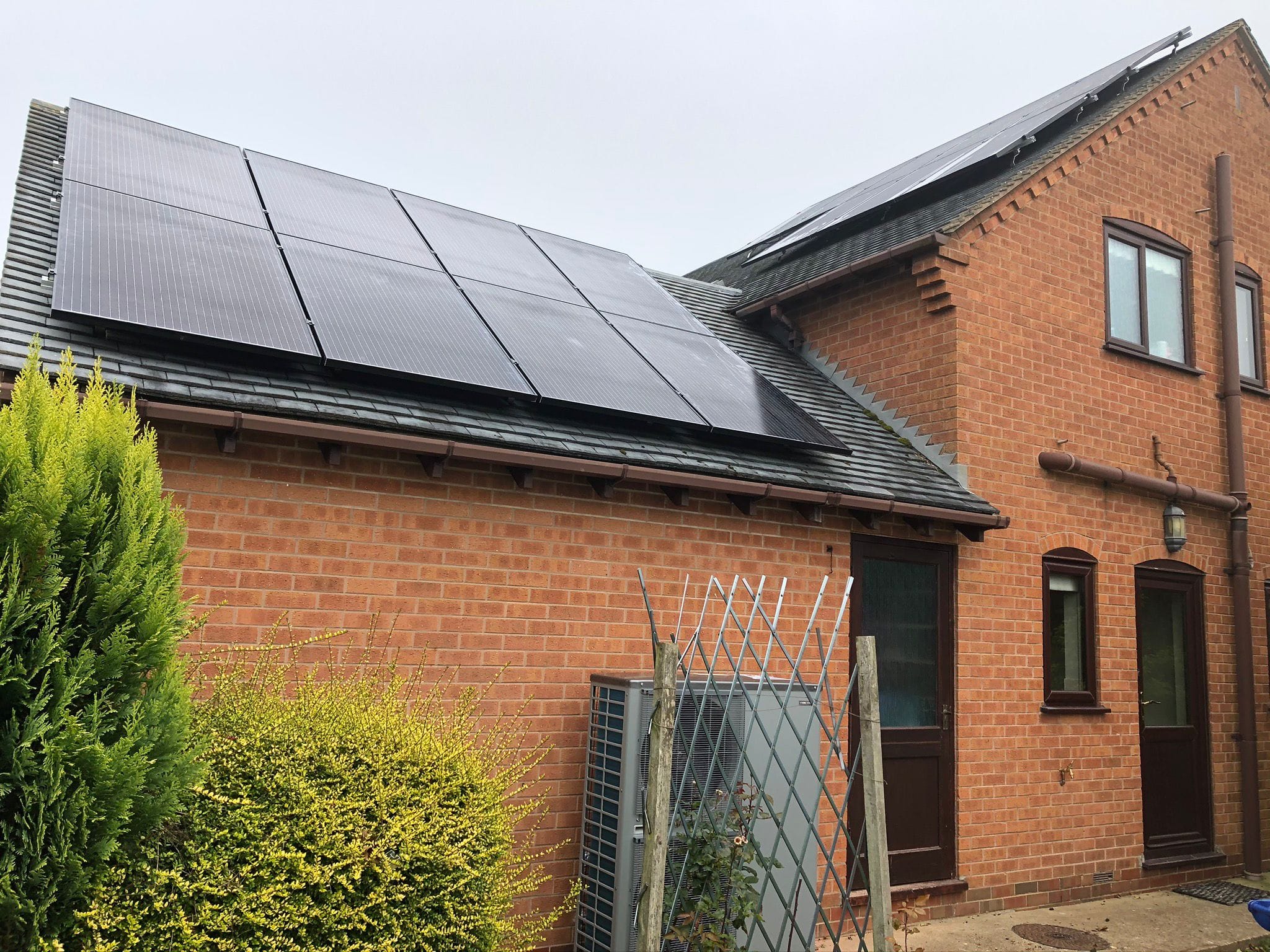
A well-designed solar system allows a household to generate electricity during daylight hours, reducing the amount purchased from the grid.
The system should be designed around the property rather than simply filling every available section of roof. Orientation, shading, roof condition and household electricity use can all affect performance.
Learn more about domestic solar panel installation.
Can the scheme be used for battery storage?
Yes. Home battery storage is eligible for loans of up to £15,000.
A battery can store spare solar electricity for use in the evening or overnight. With a suitable tariff, some systems can also charge using lower-cost off-peak electricity.
The right battery capacity depends on household consumption, solar generation, tariff and the result the homeowner wants to achieve. Installing the biggest available battery is not automatically the best option.
Learn more about home battery storage.
How much could solar and battery storage save?
The Government estimates that a household combining solar panels, battery storage and a heat pump could save up to £550 a year. It says this could increase by a further £300 with a suitable time-of-use tariff.
These are general government estimates, not guaranteed savings.
Actual performance will depend on:
- The size and design of the system
- Roof orientation and shading
- Household electricity consumption
- How much solar electricity is used at home
- Electricity and export tariffs
- Battery charging and discharging settings
- Future energy prices
A reputable installer should provide a property-specific estimate rather than relying on a national headline figure.
What should you check before taking out a loan?
Affordable monthly repayments can be attractive, but they are only part of the picture.
Before agreeing to finance, check:
- The annual percentage rate
- The total amount repayable
- The repayment period
- Early repayment conditions
- Arrangement or administration fees
- Whether you must use a particular installer
- What equipment and installation work are included
- Product, workmanship and performance warranties
Home energy upgrades should be assessed as both an energy decision and a financial commitment.
Why choose an MCS-certified installer?
Most installations funded through the scheme must be completed by an MCS-certified installer.
MCS certification provides assurance that the system has been designed and installed in line with recognised technical and consumer protection standards. It may also be required when applying for export payments for spare solar electricity.
Homeco Energy has delivered renewable energy installations since 2008. Our MCS-certified team manages the process from initial survey and system design through to installation, commissioning and aftercare.
Speak to Homeco about solar and battery storage
The Warm Homes Loan Scheme could make solar panels and battery storage more accessible by allowing homeowners to spread the cost.
Homeco can assess your property, explain the available technology and provide a clear, no-obligation quotation. We can also supply the technical information you may need when discussing finance with a participating lender.
Homeco Energy is not a financial adviser or lender. Loan availability, rates and approval are determined by participating lenders.
Contact Homeco Energy for a free solar or battery assessment.
Frequently asked questions
When did the Warm Homes Loan Scheme start?
The scheme launched in October 2026, with an initial group of participating lenders. More lenders and products may be added as the scheme develops.
Do I apply to the Government?
No. Applications are made through a participating lender, an approved installer or a participating mortgage provider.
Is the scheme interest free?
Some participating lenders offer interest-free products, while others offer reduced interest rates. Applicants should compare the available products carefully.
Can I finance solar panels and a battery together?
Yes. The scheme allows applicants to fund more than one eligible improvement, subject to the lender’s criteria and the relevant borrowing limits.
Do I need an MCS-certified installer?
Yes, most eligible technologies must be installed by an appropriately MCS-certified installer. Self-installation is not permitted.
Does the scheme cover insulation?
No. Insulation is not currently covered by the Warm Homes Loan Scheme. Other government grants may provide support for insulation.
Will the scheme pay for roof repairs?
General roof repairs and structural work are not covered. Your roof should be assessed before a solar installation is agreed.
Is approval guaranteed?
No. Participating lenders conduct their own credit, affordability and eligibility checks. Meeting the basic scheme criteria does not guarantee that a loan will be offered.